
← 3 November 2026's Current Affairs · Science & Tech GA Prelims ★★★★☆ Mains ★★☆☆☆
Quick scan: quark-gluon plasma signs seen in oxygen collisions at RHIC
ஏன் செய்தியில்?
Which state of matter filled the early universe? Quark-gluon plasma, now seen at RHIC, for GS3
STAR reports quark-gluon plasma signals from oxygen collisions at RHIC.
Why it matters: factual, Prelims-type
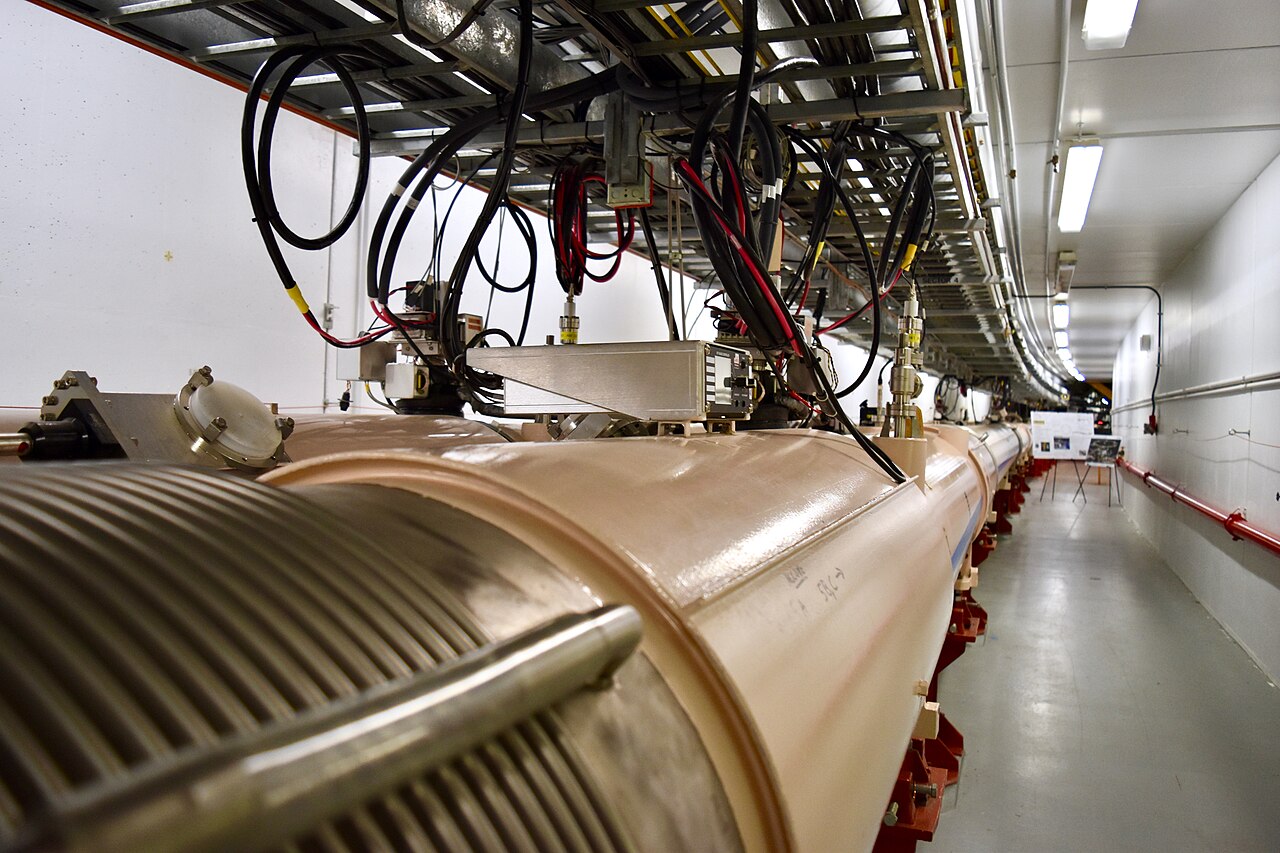
What you need to know
2 நிமிடம்
On 30 October 2026 the STAR experiment at the Relativistic Heavy Ion Collider at Brookhaven National Laboratory reported evidence of quark-gluon plasma in collisions involving oxygen.
Quark-gluon plasma is the hot, dense state of matter believed to have filled the early universe moments after the Big Bang.
Such results help study the strong nuclear force.
ஆதாரங்கள்: Topper IAS editorial (PIB / The Hindu / Indian Express)
முக்கிய உண்மைகள்
Remember these
- On 30 October 2026 the STAR experiment reported evidence of quark-gluon plasma in collisions involving oxygen.
- STAR is an experiment at the Relativistic Heavy Ion Collider (RHIC) at Brookhaven National Laboratory, United States.
- Quark-gluon plasma is a hot, dense state of matter believed to have filled the early universe moments after the Big Bang.
- In it, quarks and gluons are not confined inside protons and neutrons; gluons carry the strong nuclear force.
- Such results help scientists study the strong nuclear force, one of the four fundamental forces.
ப்ரிலிம்ஸ் · மெயின்ஸ்
How the exam will ask it
ப்ரிலிம்ஸ்
- Quark-gluon plasma is a state of matter in which quarks and gluons move freely instead of being confined within protons and neutrons.
- Gluons are the carriers of the strong nuclear force that binds quarks together.
- The Relativistic Heavy Ion Collider is located at Brookhaven National Laboratory in the United States and collides heavy ions at near light speed.
- Quark-gluon plasma is believed to have existed in the first moments after the Big Bang.
மெயின்ஸ்
GS3 Science and Technology: the study of early-universe matter through collider experiments such as STAR at RHIC advances understanding of the strong nuclear force and the origin of matter. The issue for India is its participation in big-science collaborations (CERN, ALICE, FAIR) and the spin-offs in computing, detectors and medical imaging. The way forward is sustained funding for fundamental research, access to international facilities and training of physicists.
Quick recall
Answer before you reveal
In urban planning, Transferable Development Rights are generally granted to:
- Owners who surrender land for public purposes such as road widening
- Developers who build above the sanctioned floor area ratio
- Housing societies that obtain an occupancy certificate
- Tenants who vacate premises on completion of a project
விடையைக் காட்டு
விடை: A — Correct: Owners who surrender land for public purposes such as road widening — TDR compensates owners who give up land for roads or public works with development rights usable elsewhere. • Developers who build above the sanctioned floor area ratio — wrong: Building above the sanctioned floor area ratio is a violation or needs a premium, not a TDR grant. • Housing societies that obtain an occupancy certificate — wrong: An occupancy certificate confirms lawful completion and does not earn TDR. • Tenants who vacate premises on completion of a project — wrong: Tenant rehabilitation is handled through separate schemes and not through TDR.
Convert this topic into marks
Today's 10-MCQ test · instant analysis · Powered by AdaptIQ