
← 7 October 2026's Current Affairs · Science & Tech GA Prelims ★★★☆☆ Mains ★★☆☆☆
Astronomers find a candidate second-generation planet around a white dwarf
ஏன் செய்தியில்?
A planet born after its star died? The white dwarf concept GS3 Space questions test
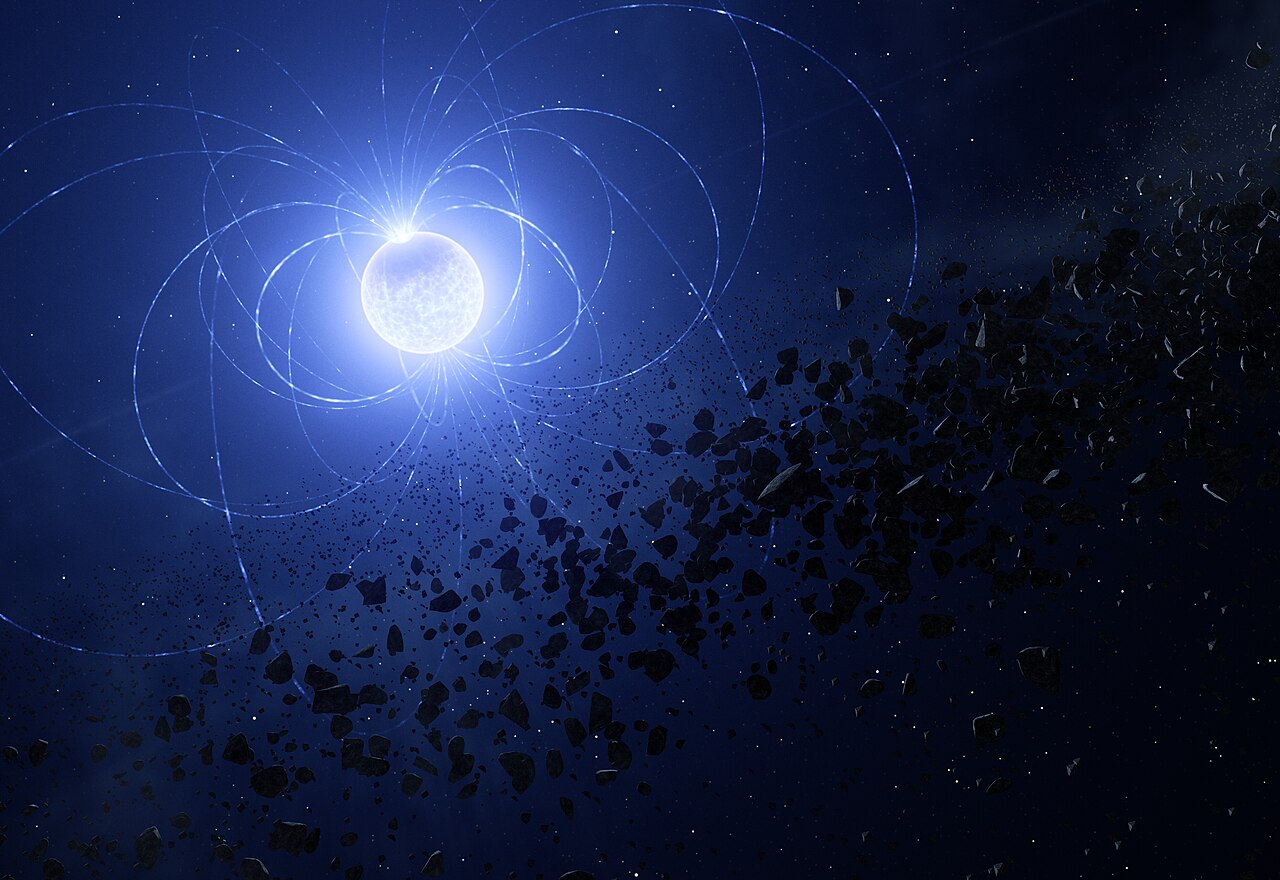
A possible 'reborn' planet is reported around the white dwarf HS 0209+0832.
Why it matters: general awareness
What you need to know
2 நிமிடம்
Astronomers have identified a candidate for a second-generation planet orbiting the white dwarf HS 0209+0832, in findings published in Nature Astronomy on 5 October.
Such a planet would have formed from material left after the star's death, rather than surviving from its earlier life.
A white dwarf is the remnant of a low or medium-mass star such as the Sun.
ஆதாரங்கள்: Topper IAS editorial (PIB / The Hindu / Indian Express)
முக்கிய உண்மைகள்
Remember these
- Astronomers report a candidate second-generation planet around the white dwarf HS 0209+0832.
- The findings were published in Nature Astronomy on 5 October.
- A second-generation planet would form from material left after the star's death, not survive from the star's earlier life.
- A white dwarf is the remnant of a low or medium-mass star such as the Sun.
- The planet is only a candidate and awaits further confirmation.
ப்ரிலிம்ஸ் · மெயின்ஸ்
How the exam will ask it
ப்ரிலிம்ஸ்
- A white dwarf is the final remnant of a low or medium-mass star such as the Sun, after it sheds its outer layers.
- A second-generation planet forms from debris produced after the host star's death, unlike a first-generation planet that forms with the star.
- Very massive stars may end as neutron stars or black holes, not white dwarfs.
மெயின்ஸ்
GS3 Science and Technology: Space. Issue: the discovery of a candidate planet forming after stellar death challenges ideas that planets only form with young stars. Provision/policy: it rests on stellar evolution and exoplanet detection methods, with results peer-reviewed in journals like Nature Astronomy. Implication and way forward: it widens the search for habitable worlds, and India can build on this through ISRO and national observatories and international collaboration.
Quick recall
Answer before you reveal
A white dwarf, around which astronomers recently found a candidate second-generation planet, is the typical end stage of:
- A very massive star that collapses into a black hole
- A massive star that explodes and leaves a neutron star
- A brown dwarf that never began hydrogen fusion
- A star of low or medium mass, such as the Sun
விடையைக் காட்டு
விடை: D — Correct: A star of low or medium mass, such as the Sun — Stars like the Sun shed their outer layers and leave behind a white dwarf core. • A very massive star that collapses into a black hole — wrong: Very massive stars may end as black holes, not white dwarfs. • A massive star that explodes and leaves a neutron star — wrong: Massive stars that explode as supernovae can leave neutron stars, not white dwarfs. • A brown dwarf that never began hydrogen fusion — wrong: A brown dwarf is a failed star and does not evolve into a white dwarf.
Convert this topic into marks
Today's 10-MCQ test · instant analysis · Powered by AdaptIQ