
← 4 October 2026's Current Affairs · Environment GA Prelims ★★★★☆ Mains ★★☆☆☆
New caecilian from Kolhapur adds to North Western Ghats biodiversity
ஏன் செய்தியில்?
Limbless, burrowing and new to Kolhapur: caecilian facts behind Western Ghats hotspot questions in GS3 Prelims
A new caecilian species was described from Kolhapur.
Why it matters: factual, Prelims-type
What you need to know
2 நிமிடம்
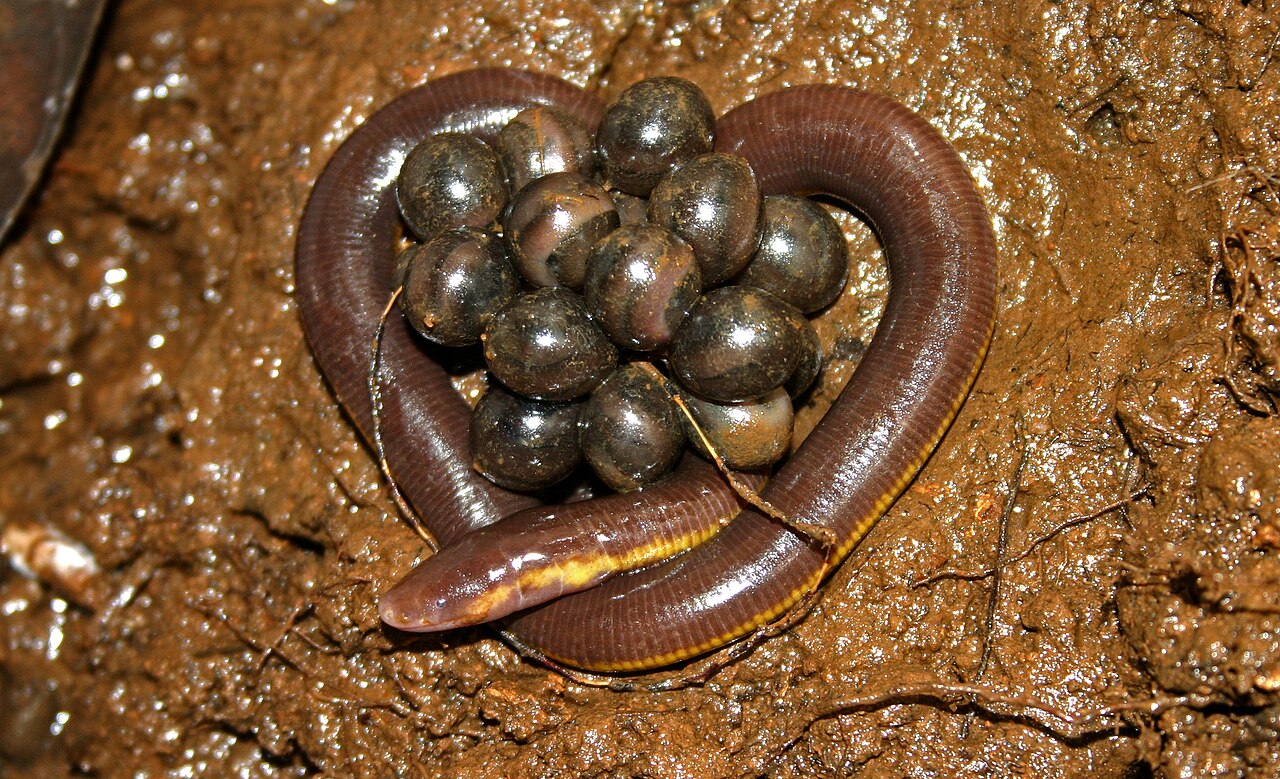
A new subterranean amphibian, Gegeneophis chandgadi, was described from the Kolhapur region of Maharashtra in September 2026.
Caecilians are limbless, burrowing amphibians.
The find adds to the Western Ghats' reputation as a biodiversity hotspot.
ஆதாரங்கள்: Topper IAS editorial (PIB / The Hindu / Indian Express)
முக்கிய உண்மைகள்
Remember these
- Gegeneophis chandgadi: new caecilian species described from the Kolhapur region of Maharashtra in September 2026
- Caecilians are limbless, burrowing (subterranean) amphibians, placed in the order Gymnophiona
- Amphibians include frogs, toads, salamanders and caecilians
- The Western Ghats is one of India's four biodiversity hotspots (with the Himalaya, Indo-Burma and Sundaland/Nicobar)
- The Western Ghats was inscribed as a UNESCO World Heritage Site in 2012
ப்ரிலிம்ஸ் · மெயின்ஸ்
How the exam will ask it
ப்ரிலிம்ஸ்
- Caecilians are limbless amphibians that live mostly underground and resemble earthworms or snakes.
- Caecilians belong to the class Amphibia, the same class as frogs and salamanders, and are not reptiles.
- A biodiversity hotspot must have at least 1,500 endemic vascular plant species and have lost at least 70% of its original habitat.
- The Western Ghats and Sri Lanka hotspot is known for high endemism among amphibians.
மெயின்ஸ்
GS3 Environment: Discovery of cryptic species such as caecilians shows how much of the Western Ghats' biodiversity is still undocumented, even in a recognised hotspot. Threats from mining, quarrying, plantation expansion and infrastructure, together with Ecologically Sensitive Area protections under the Gadgil and Kasturirangan reports, bear directly on such habitats. The way forward is systematic taxonomic surveys, habitat protection and community-based conservation, which also build the baseline data needed for IUCN assessments.
Quick recall
Answer before you reveal
KSRTC is fitting 100 of its buses with ADAS units that combine cameras, sensors and GPS. ADAS stands for:
- Automatic Driver Alert Sensors
- Advanced Directional Aid System
- Autonomous Driving Allocation System
- Advanced Driver Assistance Systems
விடையைக் காட்டு
விடை: D — Correct: Advanced Driver Assistance Systems — ADAS means Advanced Driver Assistance Systems, which use cameras and sensors to warn the driver or help avoid collisions. • Automatic Driver Alert Sensors — wrong: No such expansion is used; ADAS is not about alert sensors alone. • Advanced Directional Aid System — wrong: ADAS does not stand for a directional aid; it assists the driver, not navigation alone. • Autonomous Driving Allocation System — wrong: ADAS is not an autonomous-driving allocation system; the driver stays in control.
Convert this topic into marks
Today's 10-MCQ test · instant analysis · Powered by AdaptIQ