
← 4 October 2026's Current Affairs · Science & Tech GA Prelims ★★★☆☆ Mains ★★☆☆☆
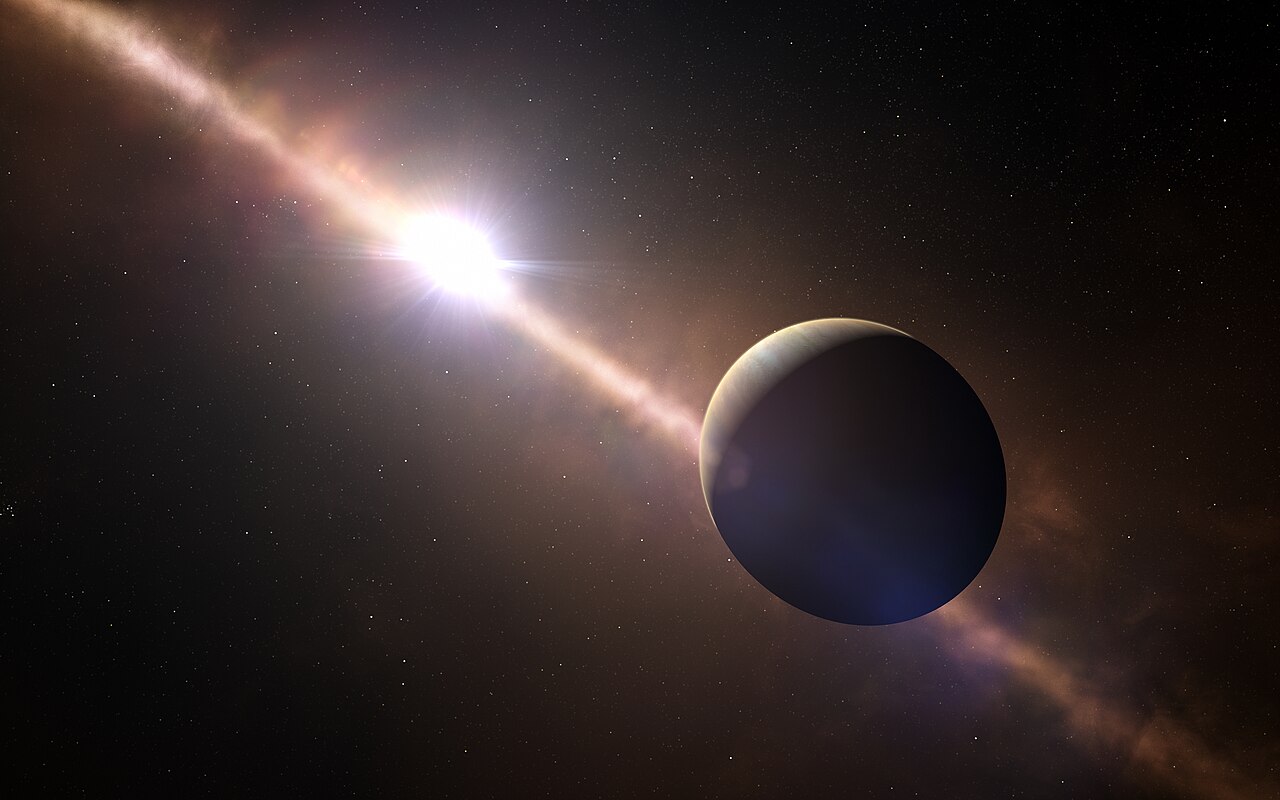
First direct radio detection from an exoplanet: Beta Pictoris b
ஏன் செய்தியில்?
A planet that broadcasts radio: why Beta Pictoris b matters for GS3 Space Science and magnetic fields
Radio signals from Beta Pictoris b are the first of their kind.
Why it matters: general awareness
What you need to know
2 நிமிடம்
Scientists announced on 23 September 2026 the first direct detection of radio signals from an exoplanet, Beta Pictoris b, a gas giant.
Radio emission from planets is linked to magnetic fields and may help study their interiors and habitability.
ஆதாரங்கள்: Topper IAS editorial (PIB / The Hindu / Indian Express)
முக்கிய உண்மைகள்
Remember these
- Announced on 23 September 2026: first direct detection of radio signals from an exoplanet
- Beta Pictoris b is a gas giant
- Planetary radio emission is linked to the planet's magnetic field
- Radio signals may help probe planetary interiors and habitability
- In the Solar System, Jupiter is a well-known radio-emitting planet due to its strong magnetosphere
ப்ரிலிம்ஸ் · மெயின்ஸ்
How the exam will ask it
ப்ரிலிம்ஸ்
- Radio emission from a planet is associated with its magnetic field and magnetosphere.
- Beta Pictoris b is a gas giant, not a rocky terrestrial planet.
- A planetary magnetic field can shield an atmosphere from stellar wind, which is relevant to habitability studies.
மெயின்ஸ்
GS3 Science & Technology (space science): radio detection of exoplanets opens a new way to study magnetic fields and interiors that optical methods cannot reach. It builds on radio astronomy facilities and shows why investment in such instruments and international collaboration matters. India can link this to its own radio astronomy capacity, such as the GMRT, and to the way forward of expanding open-data participation in space science.
Quick recall
Answer before you reveal
விடையைக் காட்டு
விடை: —
Convert this topic into marks
Today's 10-MCQ test · instant analysis · Powered by AdaptIQ