
← 14 October 2026's Current Affairs · Science & Tech GA Prelims ★★★★★ Mains ★★☆☆☆
Nobel Prize in Physics Awarded for IceCube Neutrino Observatory
വാർത്തയിൽ എന്തുകൊണ്ട്?
A telescope made of Antarctic ice: the IceCube neutrino Nobel facts for GS-III science
Francis Halzen has won the 2026 Nobel Prize in Physics for pioneering the IceCube Neutrino Observatory at the South Pole, which opened a new window on high-energy neutrinos arriving from outer space.
Why it matters: asked in UPSC 2015; factual, Prelims-type
What you need to know
2 മിനിറ്റ്
Francis Halzen has won the 2026 Nobel Prize in Physics for pioneering the IceCube Neutrino Observatory at the South Pole, which opened a new window on high-energy neutrinos arriving from outer space.
ഉറവിടങ്ങൾ: Topper IAS editorial (PIB / The Hindu / Indian Express)
പ്രധാന വസ്തുതകൾ
Remember these
- Francis Halzen has won the 2026 Nobel Prize in Physics for pioneering the IceCube Neutrino Observatory.
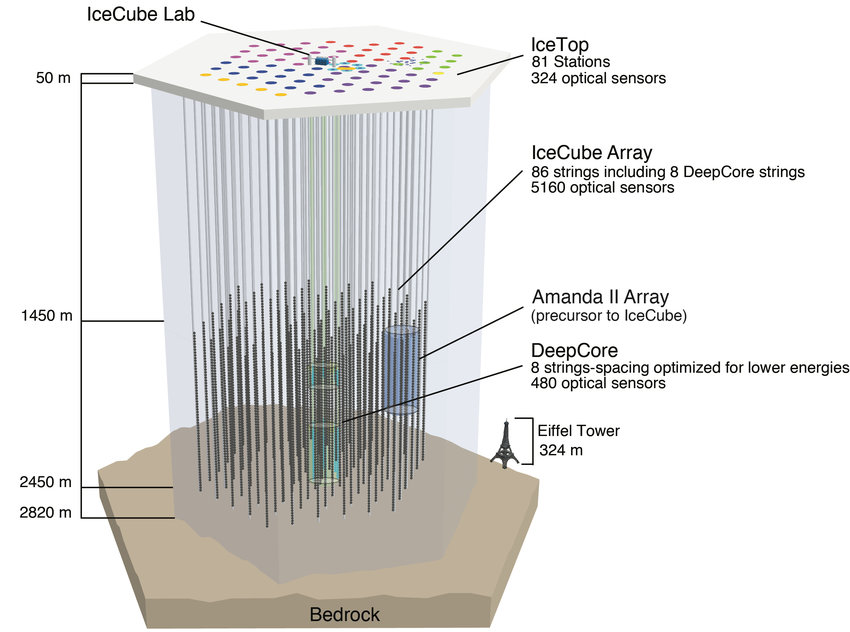
- IceCube is located at the Amundsen-Scott South Pole Station in Antarctica, with detectors buried in the ice.
- It detects high-energy neutrinos arriving from outer space, opening a new window on the universe (neutrino astronomy).
- Neutrinos are electrically neutral, have a tiny mass and interact very weakly with matter, so they travel almost undisturbed across the cosmos.
- IceCube instruments roughly a cubic kilometre of clear Antarctic ice with thousands of light sensors.
പ്രിലിംസ് · മെയിൻസ്
How the exam will ask it
പ്രിലിംസ്
- Neutrinos are electrically neutral, extremely light elementary particles that interact only through the weak force and gravity.
- IceCube detects neutrinos by sensing the faint blue Cherenkov light produced when a neutrino interacts with Antarctic ice.
- Unlike light or charged cosmic rays, neutrinos are not deflected by magnetic fields, so they point back to their cosmic sources.
- India's proposed India-based Neutrino Observatory (INO) is planned in Tamil Nadu's Theni district, in contrast to IceCube's Antarctic ice site.
മെയിൻസ്
GS-III (Science and Technology): the IceCube Nobel shows how large-scale basic research and multi-nation collaboration create new fields such as neutrino astronomy. For India, the link is to big-science projects like the India-based Neutrino Observatory, which face site, environmental and funding hurdles; the way forward is steady public funding, international partnerships and building research talent.
PYQ connection
A question UPSC has already asked on this
In the context of modern scientific research, consider the following statements about 'IceCube', a particle detector, located at South Pole, which was recently in the news:
- It is the world's largest neutrino detector, encompassing a cubic kilometre of ice.
- It is a powerful telescope to search for dark matter.
- It is buried deep in the ice.
Which of the statements given above is/are correct?
- 1 only
- 2 and 3 only
- 1, 2 and 3
- 1 and 3 only
ഉത്തരം കാണിക്കൂ
ഉത്തരം: C
Why this matters: today's issue is directly connected to a concept UPSC has already tested. Read the story with this question in mind.
Practise this PYQ →Quick recall
Answer before you reveal
The IceCube Neutrino Observatory, associated with the 2026 Nobel Prize in Physics, is located at the:
- Gran Sasso, Italy
- South Pole, Antarctica
- Kamioka, Japan
- Mauna Kea, Hawaii
ഉത്തരം കാണിക്കൂ
ഉത്തരം: B — South Pole, Antarctica is correct. South Pole, Antarctica is correct. IceCube is built into the Antarctic ice at the Amundsen-Scott South Pole Station; Gran Sasso and Kamioka host other neutrino laboratories.
Convert this topic into marks
Today's 10-MCQ test · instant analysis · Powered by AdaptIQ