
← 7 November 2026's Current Affairs · Environment GA Prelims ★★★☆☆ Mains ★★☆☆☆
Stubble burning: Punjab records 2,787 farm fires
खबर में क्यों?
2,787 farm fires in Punjab: the CAQM, Happy Seeder and GRAP facts GS3 Environment expects
Punjab's farm-fire count reaches 2,787 by 5 November.
Why it matters: general awareness
What you need to know
2 मिनट
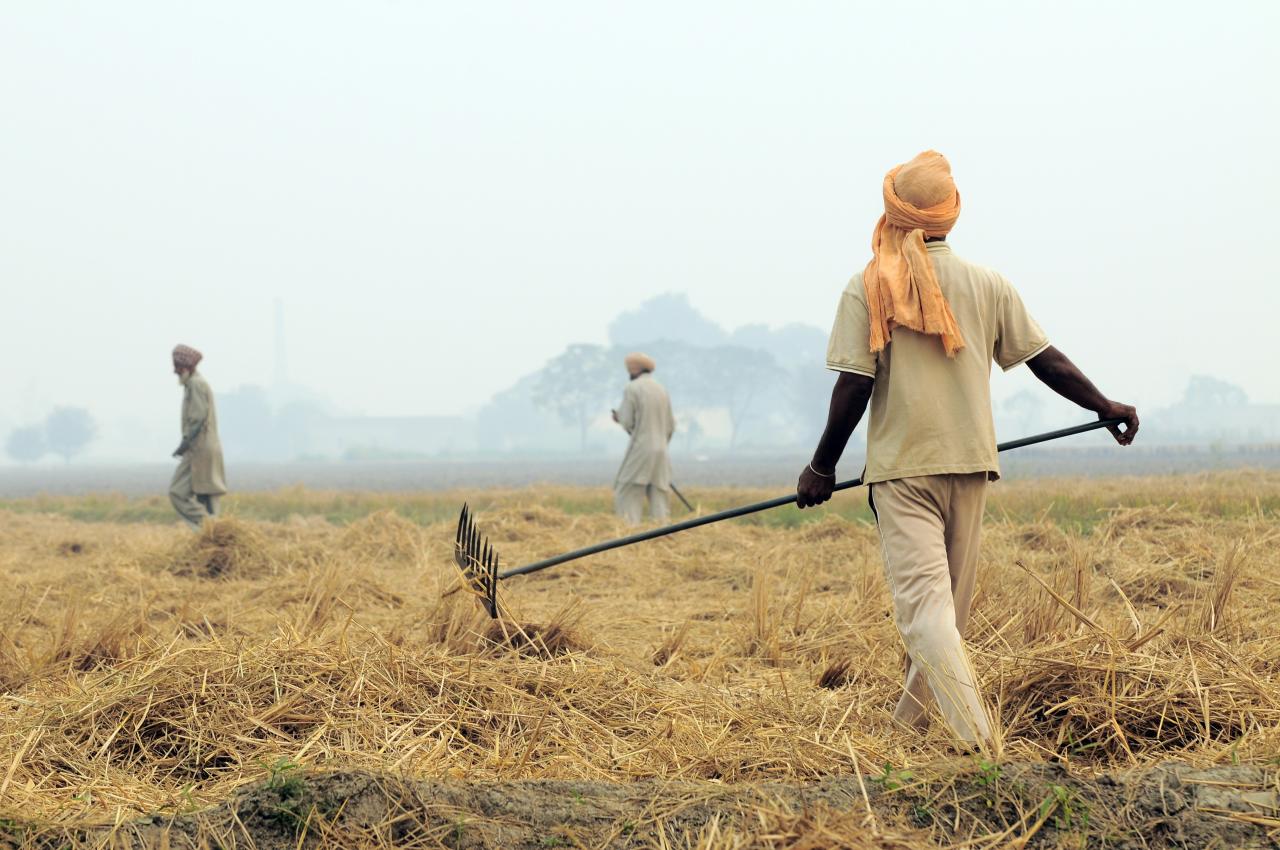
Punjab recorded 2,787 farm-fire incidents between 15 September and 5 November 2026, official data showed on 6 November.
Crop-residue burning is a major contributor to winter air pollution in north India.
स्रोत: Topper IAS editorial (PIB / The Hindu / Indian Express)
मुख्य तथ्य
Remember these
- Punjab recorded 2,787 farm-fire incidents between 15 September and 5 November 2026 (data released 6 November).
- Crop-residue (paddy stubble) burning is a major contributor to winter air pollution in north India.
- The Commission for Air Quality Management (CAQM) in NCR and Adjoining Areas was set up by a 2021 Act.
- In-situ management machines such as the Happy Seeder and Super Seeder are promoted as alternatives to burning.
- Burning of crop residue is prohibited under the Air (Prevention and Control of Pollution) Act, 1981, and NGT orders.
प्रीलिम्स · मेन्स
How the exam will ask it
प्रीलिम्स
- Stubble burning releases particulate matter (PM2.5, PM10), carbon monoxide and other pollutants, and also reduces soil nutrients and microbial activity.
- The Happy Seeder sows wheat directly into paddy residue without clearing the field, so it is an in-situ residue management method.
- The Commission for Air Quality Management in NCR and Adjoining Areas has statutory powers to issue directions on air pollution in Delhi-NCR and adjoining states such as Punjab, Haryana, Rajasthan and Uttar Pradesh.
मेन्स
GS3 (Environment, Agriculture): stubble burning in Punjab arises from the short window between paddy harvest and wheat sowing, groundwater-saving laws that delay paddy transplanting, and the high cost of residue machinery. Policy responses include CAQM directions, the central subsidy scheme for in-situ and ex-situ management and the Pusa decomposer. The way forward lies in crop diversification away from paddy, effective MSP-linked incentives, ex-situ uses such as biomass pellets and compressed biogas, and cooperative machinery banks for small farmers.
Quick recall
Answer before you reveal
उत्तर देखें
उत्तर: —
Convert this topic into marks
Today's 10-MCQ test · instant analysis · Powered by AdaptIQ