
← 11 October 2026's Current Affairs · Environment GA Prelims ★★★★☆ Mains ★★☆☆☆
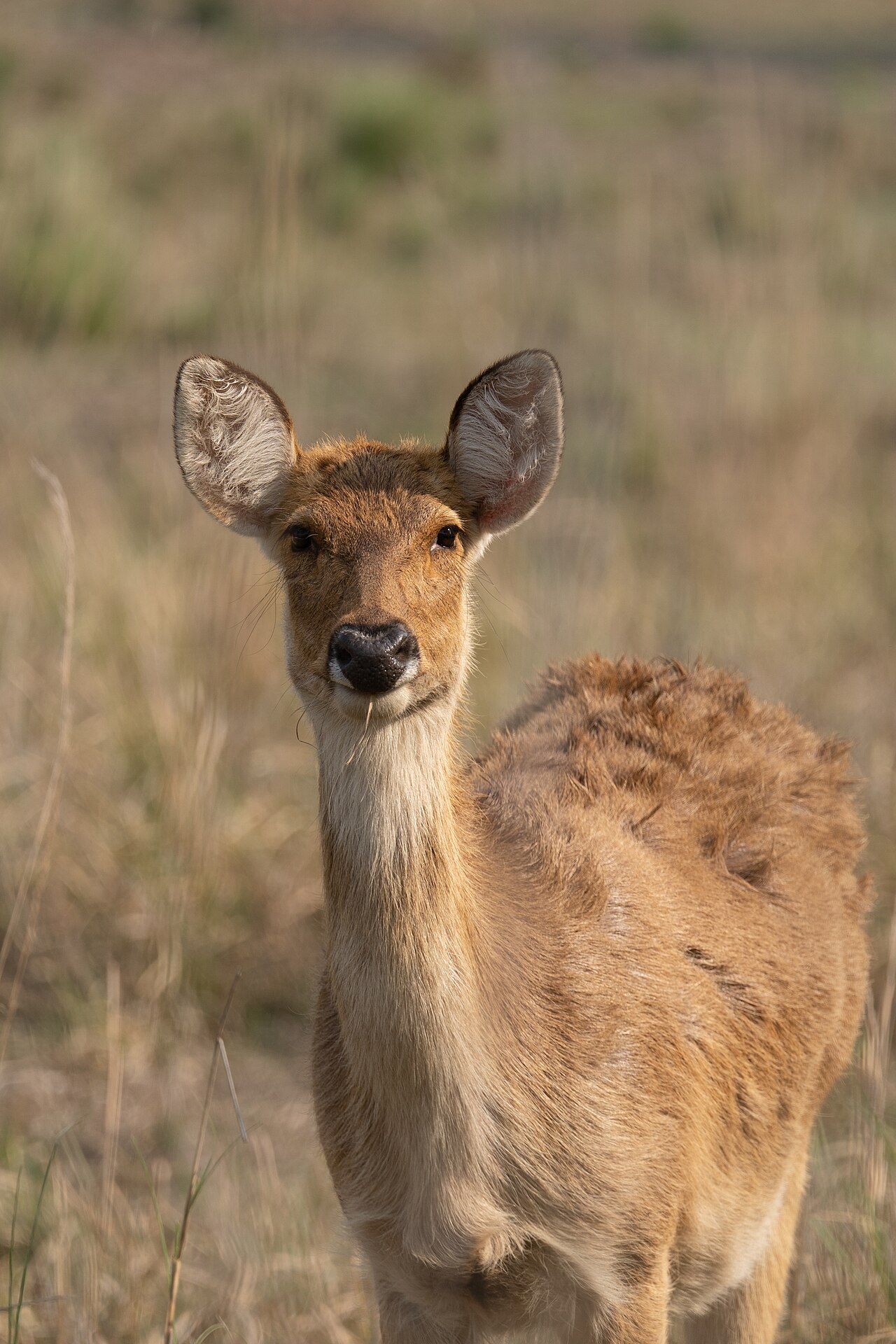
Barasingha population in Satpura Tiger Reserve crosses 300
खबर में क्यों?
From Kanha to Satpura, now 300+ strong: the barasingha translocation case Prelims species questions reward
The reintroduced population of hard-ground barasingha in Satpura Tiger Reserve in Madhya Pradesh reached about 303 animals by 10 October 2026.
Why it matters: factual, Prelims-type
What you need to know
2 मिनट
The reintroduced population of hard-ground barasingha in Satpura Tiger Reserve in Madhya Pradesh reached about 303 animals by 10 October 2026.
The deer were brought from Kanha National Park under a translocation programme.
Success of the reintroduction offers a model for restoring grassland species in other protected areas.
स्रोत: Topper IAS editorial (PIB / The Hindu / Indian Express)
मुख्य तथ्य
Remember these
- Satpura Tiger Reserve (Madhya Pradesh) now has about 303 hard-ground barasingha as of 10 October 2026
- The animals were translocated from Kanha National Park under a reintroduction programme
- Hard-ground barasingha (Rucervus duvaucelii branderi) is a subspecies of the swamp deer, found in Kanha
- Swamp deer (barasingha) is listed as Vulnerable on the IUCN Red List and is in Schedule I of the Wildlife (Protection) Act, 1972
- Barasingha is the state animal of Madhya Pradesh
प्रीलिम्स · मेन्स
How the exam will ask it
प्रीलिम्स
- Statement: The hard-ground barasingha is a subspecies of the swamp deer and is found in Kanha National Park. (Correct)
- Statement: Translocation of animals to a new protected area is an example of in-situ conservation. (Correct; a species moved within its natural habitat range to another protected area)
- Statement: Swamp deer is listed in Schedule I of the Wildlife (Protection) Act, 1972. (Correct)
मेन्स
GS-III Environment: Many grassland species are confined to a single site, which makes them vulnerable to disease and disasters. Translocation under Wildlife (Protection) Act and NTCA/WII guidance spreads that risk and, as in Satpura, can establish a second viable population. The way forward is protecting grassland habitat, scientific monitoring after release and community involvement, so that the model can be replicated in other protected areas.
Quick recall
Answer before you reveal
The hard-ground barasingha reintroduced in Satpura Tiger Reserve, whose population has crossed 300, were brought from which national park?
- Kanha National Park
- Bandhavgarh National Park
- Pench National Park
- Panna National Park
उत्तर देखें
उत्तर: A — Correct: Kanha National Park — The hard-ground barasingha for Satpura were translocated from Kanha, the species' stronghold in Madhya Pradesh. • Bandhavgarh National Park — wrong: Bandhavgarh is a tiger reserve in Madhya Pradesh but was not the source of the Satpura barasingha. • Pench National Park — wrong: Pench is a Madhya Pradesh tiger reserve but was not the source of the Satpura barasingha. • Panna National Park — wrong: Panna is a Madhya Pradesh tiger reserve known for tiger reintroduction, not the source of the barasingha.
Convert this topic into marks
Today's 10-MCQ test · instant analysis · Powered by AdaptIQ