
← 7 October 2026's Current Affairs · Science & Tech GA Prelims ★★★★★ Mains ★★☆☆☆
2026 Nobel Prize in Physics goes to IceCube pioneer Francis Halzen
खबर में क्यों?
A detector buried in Antarctic ice just won a Nobel: the IceCube neutrino facts GS3 Science tests
Francis Halzen wins the 2026 Physics Nobel for the IceCube neutrino observatory.
Why it matters: asked in UPSC 2015; factual, Prelims-type
What you need to know
2 मिनट
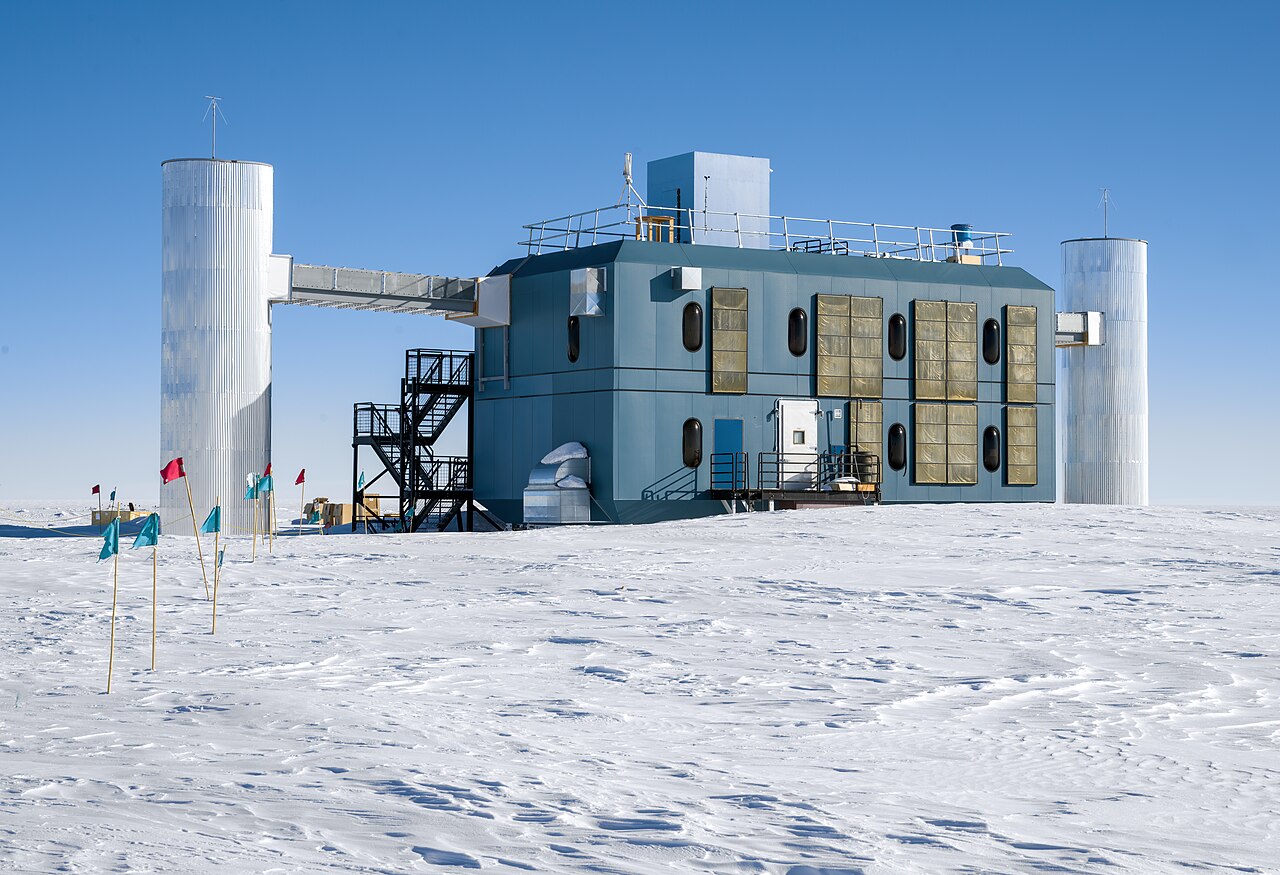
Belgian particle physicist Francis Halzen of the University of Wisconsin-Madison has won the 2026 Nobel Prize in Physics for his leading role in the IceCube neutrino detector, which captures neutrinos from space in the Antarctic ice.
IceCube's discoveries opened a new window on high-energy neutrinos of cosmic origin.
स्रोत: Topper IAS editorial (PIB / The Hindu / Indian Express)
मुख्य तथ्य
Remember these
- Francis Halzen (University of Wisconsin-Madison, Belgian-born) won the 2026 Nobel Prize in Physics for leading IceCube
- IceCube is a neutrino observatory built into the Antarctic ice at the South Pole
- Neutrinos are nearly massless, electrically neutral particles that rarely interact with matter
- IceCube's discoveries opened a new window on high-energy neutrinos of cosmic origin
- Other neutrino detectors: Super-Kamiokande (Japan, water), KM3NeT (Mediterranean), Baikal-GVD (Russia)
प्रीलिम्स · मेन्स
How the exam will ask it
प्रीलिम्स
- IceCube Neutrino Observatory is located at the South Pole, Antarctica, and uses the ice as its detection medium.
- Neutrinos are electrically neutral, extremely light particles that interact only weakly with matter, so they can travel across the universe almost unimpeded.
- Super-Kamiokande in Japan is a water-based neutrino detector, whereas IceCube uses Antarctic ice.
- India's own neutrino project, the India-based Neutrino Observatory (INO), was proposed in Tamil Nadu's Theni district.
मेन्स
GS3 Science and Technology: Nobel-winning big-science projects show how multinational collaboration enables discoveries in astroparticle physics. Issue: neutrino astronomy opens a new window on cosmic sources, complementing light and gravitational waves. Implication for India: participation in global facilities and delays in INO highlight the need for steady funding, clearances and talent retention; way forward is joint projects plus a faster domestic approval pipeline.
PYQ connection
A question UPSC has already asked on this
In the context of modern scientific research, consider the following statements about 'IceCube', a particle detector, located at South Pole, which was recently in the news:
- It is the world's largest neutrino detector, encompassing a cubic kilometre of ice.
- It is a powerful telescope to search for dark matter.
- It is buried deep in the ice.
Which of the statements given above is/are correct?
- 1 only
- 2 and 3 only
- 1, 2 and 3
- 1 and 3 only
उत्तर देखें
उत्तर: C
Why this matters: today's issue is directly connected to a concept UPSC has already tested. Read the story with this question in mind.
Practise this PYQ →Quick recall
Answer before you reveal
The IceCube Neutrino Observatory, whose pioneering work won the 2026 Nobel Prize in Physics, is located at:
- Lake Baikal, Russia
- The South Pole, Antarctica
- Kamioka mine, Japan
- The Mediterranean seabed off Sicily
उत्तर देखें
उत्तर: B — Correct: The South Pole, Antarctica — IceCube is built into the Antarctic ice at the South Pole and detects high-energy neutrinos from space. • Lake Baikal, Russia — wrong: Lake Baikal hosts a different neutrino telescope, Baikal-GVD, not IceCube. • Kamioka mine, Japan — wrong: The Kamioka mine houses Super-Kamiokande, a water detector, not IceCube. • The Mediterranean seabed off Sicily — wrong: The Mediterranean seabed hosts the KM3NeT telescope, not IceCube.
Convert this topic into marks
Today's 10-MCQ test · instant analysis · Powered by AdaptIQ