
← 4 October 2026's Current Affairs · Environment GA Prelims ★★★☆☆ Mains ★★☆☆☆
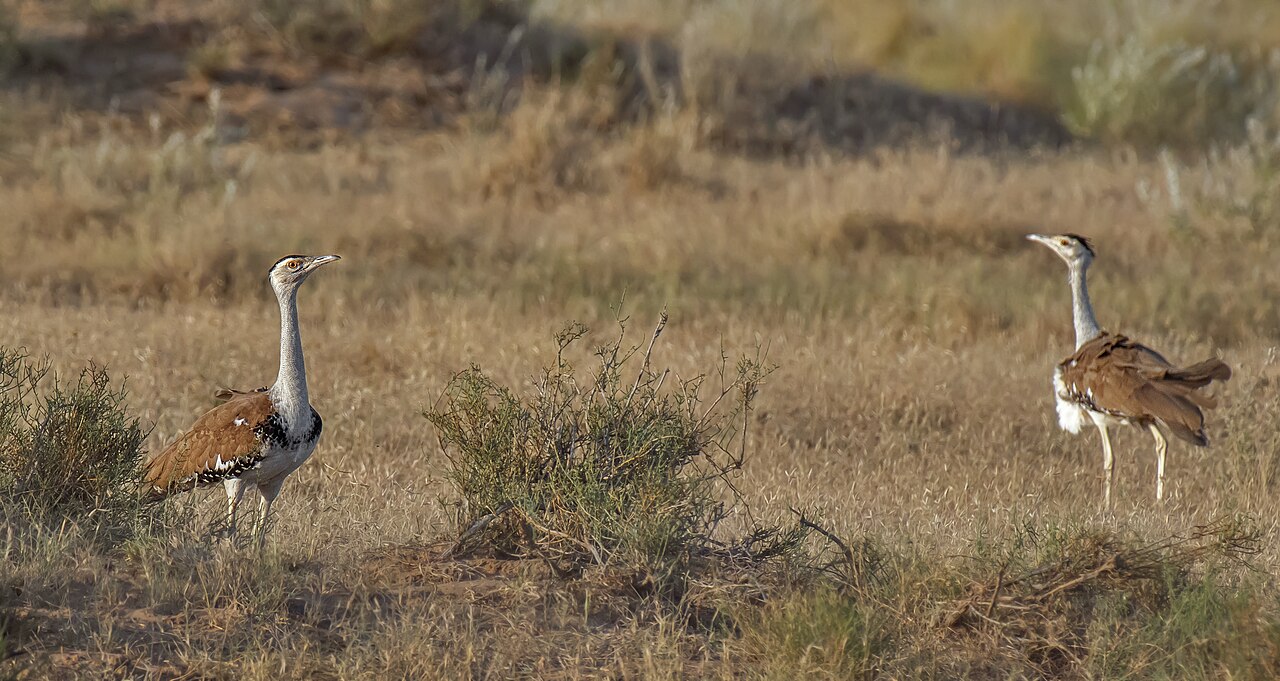
Captive-bred Great Indian Bustards to be released in Jaisalmer
खबर में क्यों?
Critically Endangered yet Schedule I: the Great Indian Bustard release that tests IUCN and Wildlife Act answers
Ten captive-bred bustards head for the wild in Jaisalmer.
Why it matters: general awareness
What you need to know
2 मिनट
Ten captive-bred Great Indian Bustards (Ardeotis nigriceps) are due for release in Jaisalmer, Rajasthan, on 3 and 4 October 2026.
The bird is Critically Endangered on the IUCN Red List and is on Schedule I of the Wildlife (Protection) Act, 1972.
Captive breeding in Jaisalmer aims to rebuild a wild population threatened by power lines and habitat loss.
स्रोत: Topper IAS editorial (PIB / The Hindu / Indian Express)
मुख्य तथ्य
Remember these
- Ten captive-bred Great Indian Bustards are due for release in Jaisalmer, Rajasthan, on 3 and 4 October 2026
- Scientific name: Ardeotis nigriceps
- IUCN Red List status: Critically Endangered
- Protected under Schedule I of the Wildlife (Protection) Act, 1972
- Key threats: overhead power lines and habitat loss
प्रीलिम्स · मेन्स
How the exam will ask it
प्रीलिम्स
- The Great Indian Bustard (Ardeotis nigriceps) is listed as Critically Endangered in the IUCN Red List.
- The Great Indian Bustard is placed in Schedule I of the Wildlife (Protection) Act, 1972, which gives it the highest legal protection.
- Captive breeding in Jaisalmer, Rajasthan, is an ex-situ conservation measure meant to rebuild the wild population.
- Collision with power lines and loss of grassland habitat are major threats to the species.
मेन्स
GS3 Environment: biodiversity conservation. The issue is a collapsing wild population of the Great Indian Bustard, hit by power-line collisions and habitat loss. The policy response is Schedule I protection under the Wildlife (Protection) Act, 1972 and ex-situ captive breeding with release. The way forward is to make power lines safer (undergrounding or bird diverters) and to secure grassland habitat so that released birds survive.
Quick recall
Answer before you reveal
Consider the following statements about the Great Indian Bustard (Ardeotis nigriceps):
- It is listed as Critically Endangered in the IUCN Red List.
- It is protected under Schedule I of the Wildlife (Protection) Act, 1972.
Which of the statements given above is/are correct?
- 1 only
- 2 only
- Both 1 and 2
- Neither 1 nor 2
उत्तर देखें
उत्तर: C — Correct: Both 1 and 2 — Right: the Great Indian Bustard is Critically Endangered on the IUCN Red List and enjoys the highest protection of Schedule I, so both statements hold. • 1 only — wrong: Wrong: statement 2 is also true, since the species is on Schedule I of the Wildlife (Protection) Act, 1972. • 2 only — wrong: Wrong: statement 1 is also true, since the IUCN Red List treats the species as Critically Endangered. • Neither 1 nor 2 — wrong: Wrong: both statements are true, so at least one is correct.
Convert this topic into marks
Today's 10-MCQ test · instant analysis · Powered by AdaptIQ