
← 7 November 2026's Current Affairs · Environment GA Prelims ★★★★☆ Mains ★★☆☆☆
Study finds Kerala's mangrove cover expanded over the past decade
Why in News?
Kerala's mangroves grew in a decade: which ministry-linked institute mapped it? A GS3 Environment Prelims favourite
CMFRI study shows net gain in Kerala's mangroves over a decade.
Why it matters: factual, Prelims-type
What you need to know
2 min read
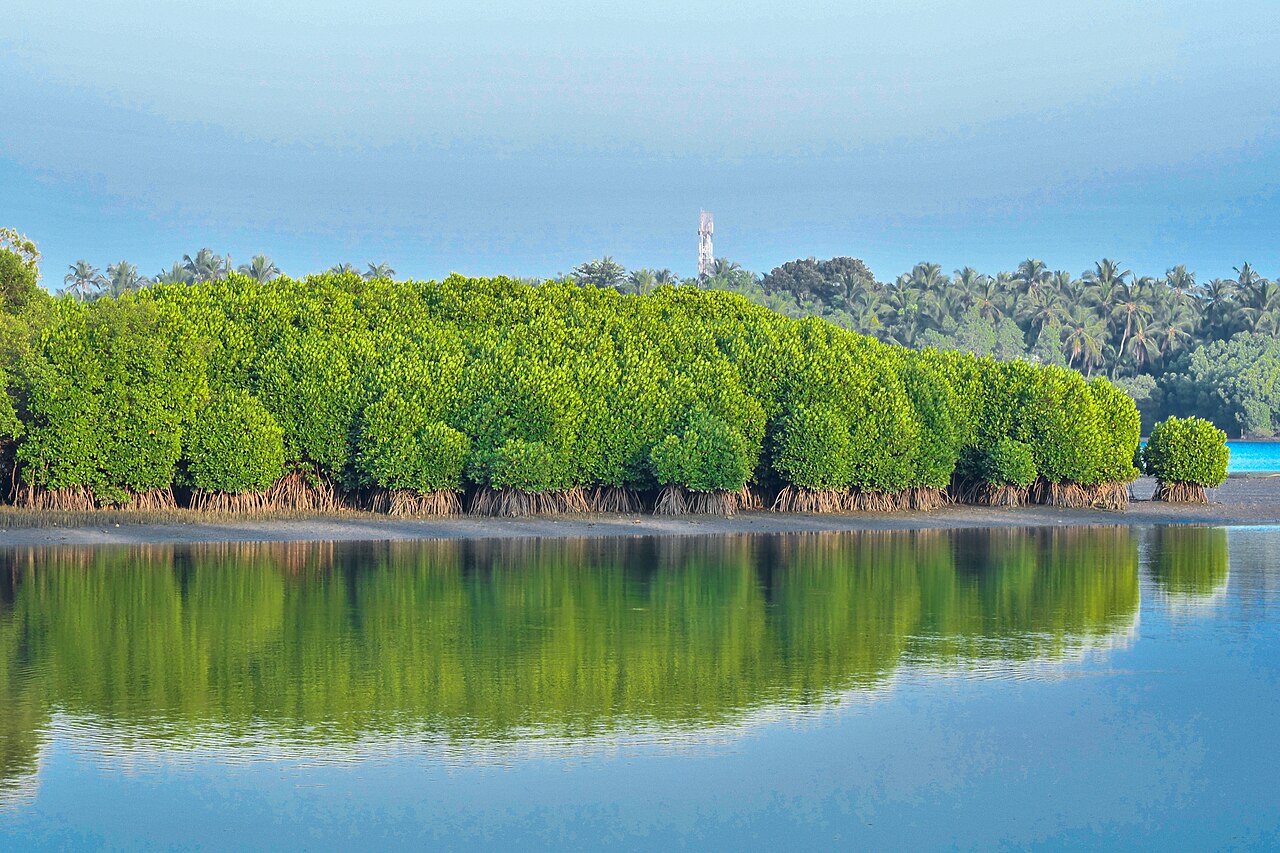
A study by ICAR-Central Marine Fisheries Research Institute, Kochi, compared satellite images from 2017 and 2026 and found that mangrove cover in Kerala's coastal districts increased overall in the past decade, despite earlier decline.
Mangroves protect coasts and support fisheries.
Sources: Topper IAS editorial (PIB / The Hindu / Indian Express)
Key facts
Remember these
- ICAR-Central Marine Fisheries Research Institute (CMFRI) is headquartered at Kochi, Kerala
- The study compared satellite images from 2017 and 2026
- Mangrove cover in Kerala's coastal districts showed a net increase despite earlier decline
- Mangroves protect coasts from erosion and storm surges and support fisheries as nurseries
- CMFRI functions under the Indian Council of Agricultural Research (ICAR)
Prelims · Mains
How the exam will ask it
Prelims
- Mangroves are salt-tolerant forests found in intertidal zones of tropical and subtropical coasts, and many species have pneumatophores (breathing roots).
- CMFRI, Kochi is an institute of the Indian Council of Agricultural Research and not of the CSIR.
- Mangroves act as a natural barrier against cyclones, storm surges and coastal erosion, and serve as breeding and nursery grounds for fish and prawns.
- The Sundarbans in West Bengal is the largest mangrove forest in India.
Mains
GS3 (Environment, biodiversity, disaster management): Mangroves face threats from reclamation, aquaculture and pollution -> protected through CRZ Notification, Wildlife Protection Act and schemes like MISHTI -> a net gain in Kerala shows that restoration and community protection can work -> the way forward is satellite-based monitoring, community-led replanting, strict CRZ enforcement and integrating mangroves into climate adaptation plans.
Quick recall
Answer before you reveal
The Central Marine Fisheries Research Institute (CMFRI), Kochi, whose study mapped Kerala's mangrove change, functions under which body?
- Council of Scientific and Industrial Research
- Indian Council of Agricultural Research
- Indian Council of Medical Research
- Department of Science and Technology
Show answer
Answer: B — Correct answer: Indian Council of Agricultural Research. CMFRI is an institute of the Indian Council of Agricultural Research (ICAR).
Convert this topic into marks
Today's 10-MCQ test · instant analysis · Powered by AdaptIQ