
← 28 September 2026's Current Affairs · International Relations GS-2 Prelims ★★★★☆ Mains ★★★★★
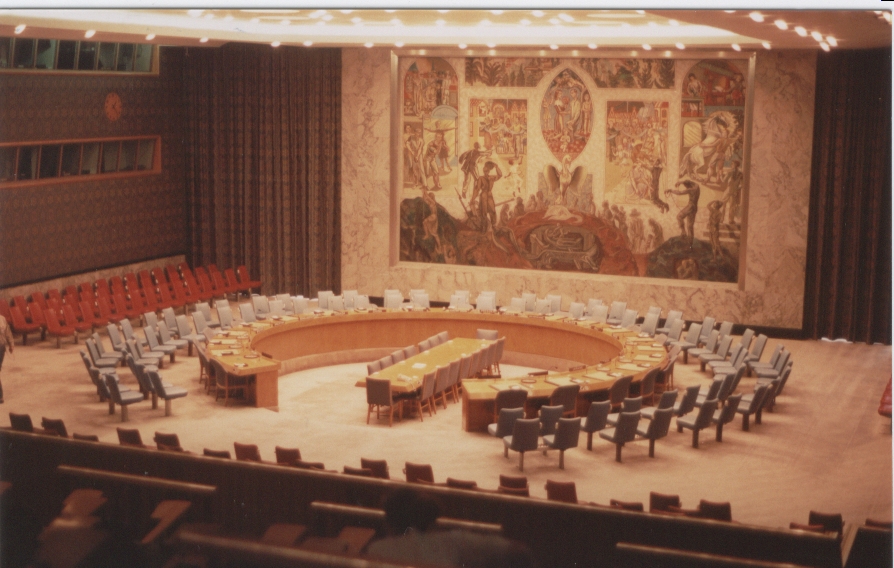
UNGA's 81st session revives Security Council reform debate
Why in News?
G4 wants permanent UNSC seats — the two-thirds-plus-P5-ratification rule that keeps blocking them
The UNGA's 81st session saw renewed debate on UN Security Council reform between the G4 and the Uniting for Consensus bloc.
Why it matters: GS-2 core; factual, Prelims-type
What you need to know
2 min read
The 81st session of the UN General Assembly took place amid renewed debate over reform of the UN Security Council, with the G4 group of India, Japan, Germany and Brazil continuing to press for permanent seats.
Opposing expansion of the permanent membership is the 'Uniting for Consensus' group, informally called the Coffee Club, which favours only expanding non-permanent seats.
Security Council reform remains stalled by the need for a two-thirds General Assembly majority and ratification by all five existing permanent members.
Sources: Topper IAS editorial (PIB / The Hindu / Indian Express)
Key facts
Remember these
- The UNGA's 81st session saw renewed debate over UN Security Council reform.
- G4 = India, Japan, Germany and Brazil, pressing for permanent Security Council seats.
- 'Uniting for Consensus' (informally the Coffee Club) opposes permanent-seat expansion, favouring more non-permanent seats.
- UN Charter amendment needs a two-thirds UNGA majority plus ratification by all five existing permanent members.
Prelims · Mains
How the exam will ask it
Prelims
- The G4 grouping comprises India, Japan, Germany and Brazil.
- 'Uniting for Consensus' is informally known as the Coffee Club.
- Security Council reform requires a two-thirds majority in the UN General Assembly.
- Any Charter amendment must also be ratified by all five permanent Security Council members.
Mains
GS Paper 2 - International Relations. The UN Security Council's composition still reflects the 1945 post-war order, and its reform mechanism - a two-thirds UNGA majority plus ratification by all five permanent members - lets the P5 effectively veto changes to their own privileged status. This structural deadlock, sharpened by the G4-versus-Uniting for Consensus divide, keeps stalling India's bid for a permanent seat despite its growing global standing; the way forward lies in sustained Intergovernmental Negotiations (IGN) and coalition-building that bridges both blocs.
Quick recall
Answer before you reveal
The grouping that opposes the G4 nations' demand for permanent UN Security Council seats and instead favours expanding only non-permanent membership is formally known as:
- Non-Aligned Movement
- Group of 77
- Uniting for Consensus
- Small Island Developing States
Show answer
Answer: C — Correct: Uniting for Consensus - opposes G4-style permanent-seat expansion, favouring more non-permanent seats instead. • Non-Aligned Movement - wrong: a broader political grouping, not this specific bloc. • Group of 77 - wrong: focused on economic/development issues. • Small Island Developing States - wrong: focused on climate vulnerability.
Convert this topic into marks
Today's 10-MCQ test · instant analysis · Powered by AdaptIQ